

Pulsed Light decontamination of Twist-Off cap on filling lines
On sensitive beverage filling lines, everything is controlled: controlled environments, validated processes, and high-performance equipment.
But the cap plays a critical role in microbiological safety. Metal twist-off caps, easily recognizable by their threaded opening used on glass bottles and jars, are made of aluminum or steel, providing strength and reliability.
Available in a wide range of sizes and designs, they can be adapted to the specific requirements of each container and filling line.
For twist-off caps, this step is particularly critical because it takes place at the very end of the process.
Based on our experience, cap decontamination is a key step in preventing recontamination during capping, directly impacting microbiological stability, shelf life, and product quality.

A wide range of applications and formats
The use of twist-off caps has expanded significantly in recent years, far beyond traditional applications. Today, they can be found across a wide range of product, including dairy beverages, juices, smoothies, plant-based alternatives, kombucha, and sauces.
This diversity of applications comes with a wide variety of cap formats, diameters, heights, and materials, as well as high microbiological requirements, particularly for fresh or minimally processed products.
Rethinking cap treatment
For many years, producers have relied on a combination of filling, closing and thermal processes to ensure the safety and shelf life of packaged food products using twist-off closures. Depending on the product and process, these may include hot filling, pasteurization or sterilization, while steam-vacuum systems are also used during the closing process to create the vacuum and ensure proper sealing.
While these processes have proven effective, they can involve significant operational constraints. Heat management, process complexity, production line integration and the need to meet increasingly demanding microbiological requirements can all add complexity to the overall process.
At the same time, manufacturers are under increasing pressure to reduce energy consumption, simplify production processes and limit the use of chemicals wherever possible.
These challenges are driving manufacturers to rethink how twist-off closures can be decontaminated before they reach the product.
A light-based technology alternative: Pulsed Light
Pulsed Light decontamination is part of this shift toward more efficient and simplified production processes. The technology uses intense flashes of light to rapidly eliminate microorganisms present on the surface of the caps.
A key advantage of the process is that it is dry, non-thermal and contactless. It requires neither water nor chemicals and leaves no chemical residues on the treated packaging.
Beyond microbiological performance, Pulsed Light simplifies the overall production process. The treatment can be integrated directly into existing or new filling lines, without an intermediate step and without compromising cap integrity.
From technology to industrial solutions
Pulsed Light is a proven technology. But bringing its benefits to industrial production requires much more than the technology itself. It requires the ability to adapt it to real production environments, integrate it into existing equipment and lines, and consistently deliver the required microbiological performance.
This is where Claranor’s expertise makes the difference.
For more than 20 years, Claranor has been turning Pulsed Light technology into reliable industrial solutions for the food industry. Our patented technologies have been developed with a deep understanding of the challenges faced by both equipment manufacturers and food producers: microbiological performance, line speed, available space, integration constraints and production requirements.
Our multidisciplinary teams combine expertise in engineering, microbiology, automation and industrial integration to design solutions that fit real production environments. From compact systems for space-constrained lines to high-speed applications, Claranor develops and industrializes Pulsed Light solutions adapted to each production line and its specific microbiological requirements.
Beyond the technology itself, Claranor provides turnkey solutions and a comprehensive range of services throughout the equipment’s lifecycle. From project design and line integration to commissioning, validation, training, maintenance and technical support, our teams work alongside customers to ensure reliable and lasting performance in production.
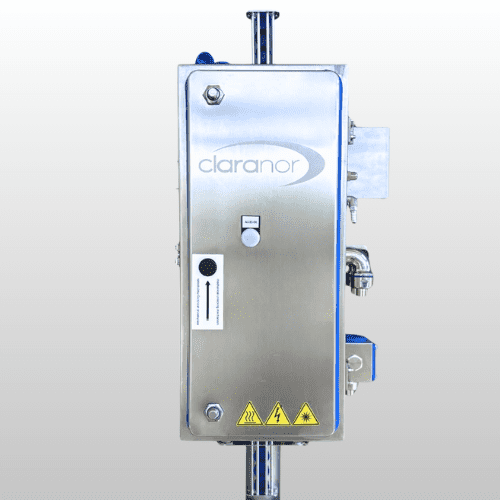
INNCAP Essential
Decontamination of the inside of the cap
Line speeds up to 16,000 bph
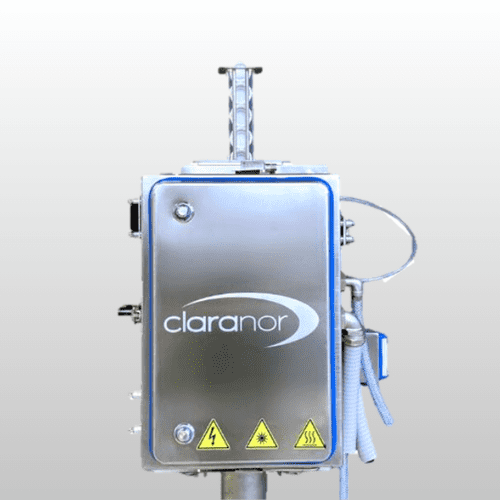
INNCAP Evolution
Decontamination of the inside of the cap
Line speeds above 16,000 bph
A proven technology for twist-off caps
Since 2017, manufacturers across Europe and the United States have integrated Pulsed Light decontamination solutions for twist-off caps, both on dairy filling lines and in dairy-free applications.
These installations have demonstrated the technology’s ability to accommodate a wide variety of cap formats and line speeds, while meeting industrial requirements for performance and reliability.
Microbiological testing conducted in our in-house laboratory
Beyond the technology and equipment itself, microbiological validation remains a key step in securing a cap decontamination project.
At Claranor, we support our customers from the early stages of a project through our dedicated in-house laboratories. Our microbiology experts, Alain and Magalie, conduct cap testing under conditions representative of industrial production environments.
These tests allow us to precisely evaluate the effectiveness of Pulsed Light decontamination on your specific cap formats, taking into account their characteristics, including geometry, materials, and critical contact areas.
This approach gives manufacturers a clear understanding of expected performance before line integration and helps support the validation of the selected technology.
Our Laboratory Engineers
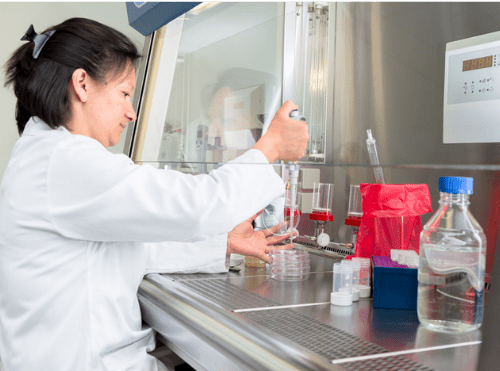
Magalie Bry
Claranor Laboratory
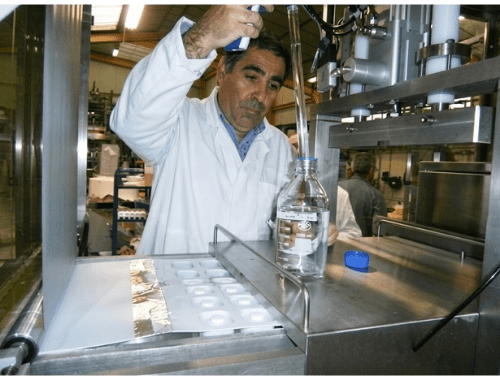
Alain Berberian
On-site industrial testing
Our Support & Services
- Adaptable machines designed for easy integration into existing filling lines
- Original spare parts readily available to maintain equipment performance
- Remote technical support and dedicated online resources
- Optimized maintenance with preventive monitoring and customized contracts adapted to each production site
- Training for your teams to ensure autonomous and efficient operation